
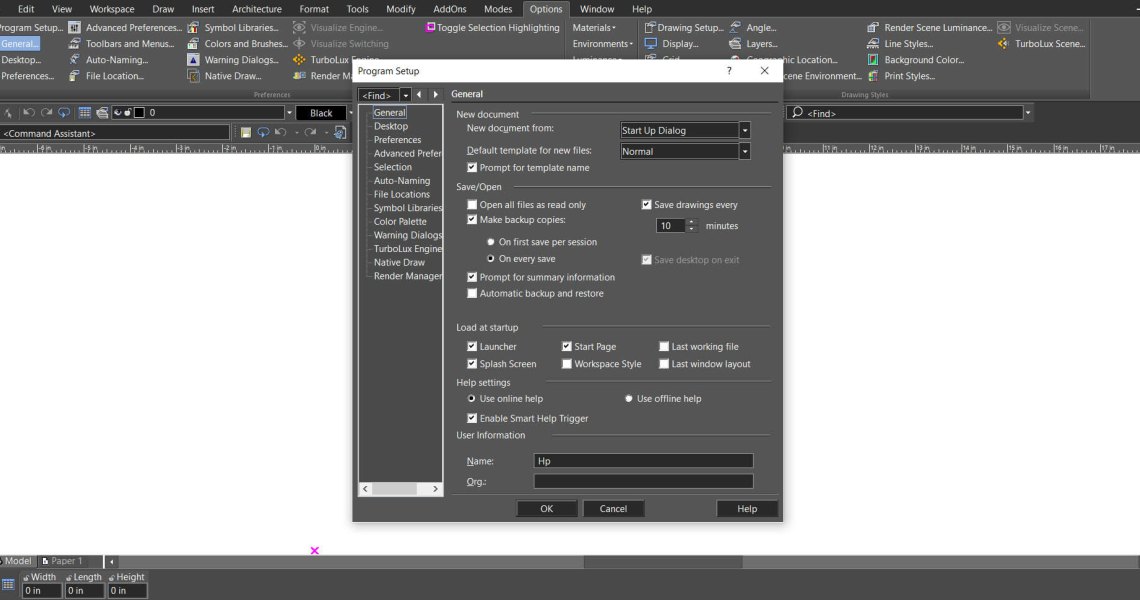
Looking something up usually means breaking off what you were doing. Smart Help Trigger removes that step. With the...
TurboCAD 2026 is here. Upgrade from any earlier version and save.
See upgrade prices →
Questions? [email protected]
Latest posts
-
 Copilot Palette: Smart Help TriggerRead more
 -
 Conceptual Visualization from Your CAD Model with Copilot RenderRead more
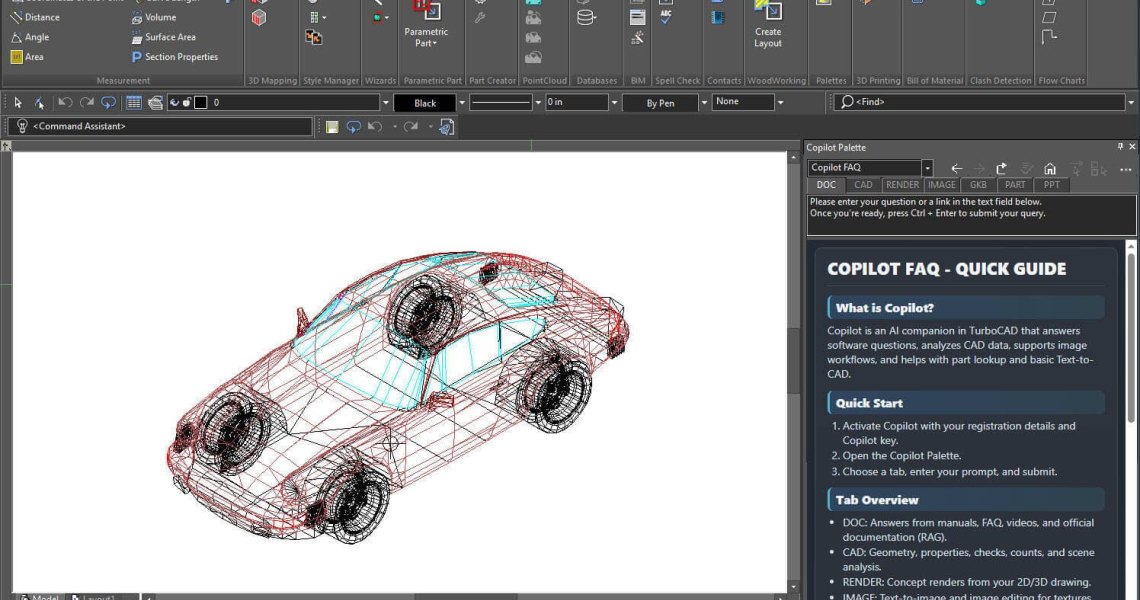
There is usually a gap between a drawing that is technically finished and one a client can react to. Copilot Render...
-
 How to Customize and Manage TurboCAD WorkspacesRead more
Most drawing sessions only ever touch a fraction of what TurboCAD can do. A mechanical part and a floor plan need...
-
 IMSI Design Releases TurboCAD® 2026.1Read more
Maintenance Release Improves Stability, Rendering, Customisation, and Interoperability
-
 IMSI Design Releases FloorPlan® 2026Read more
Copilot Built In. A Clearer Interface. Better SketchUp Handling.
-
 IMSI Design Releases TurboCAD® Mac 17Read more
NOVATO, Calif. June 8, 2026 – IMSI® Design announced today the release of TurboCAD® Mac® 17, available in four...
-
 IMSI Design Releases TurboCAD® 2026Read more
NOVATO, Calif. – May 11, 2026 – IMSI® Design, a leader in CAD software innovation, announces the release of TurboCAD®...
-
 Turning My Living Room into an Elegant Dream Space (Mac)Read more
Redesigning a living space is more than just changing furniture or colors - it is about creating an environment that...
-
 Spring Awakening in the Garden – How to Plan Your Green Paradise (Mac)Read more
Spring is the ideal season to breathe new life into your garden. With warmer temperatures and longer days, it’s the...
-
 Spring Awakening in the Garden – How to Plan Your Green ParadiseRead more
Spring is the ideal season to breathe new life into your garden. With warmer temperatures and longer days, it’s the...
Blog categories
- Press Releases (11)
- Blog (26) click
Search in blog
How to Customize and Manage TurboCAD Workspaces
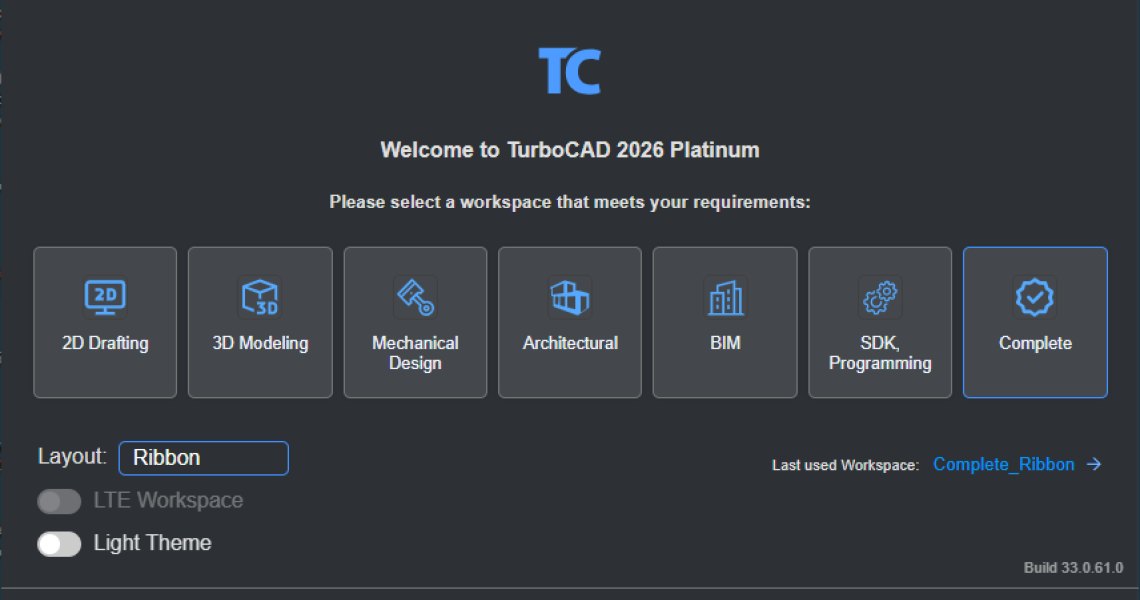
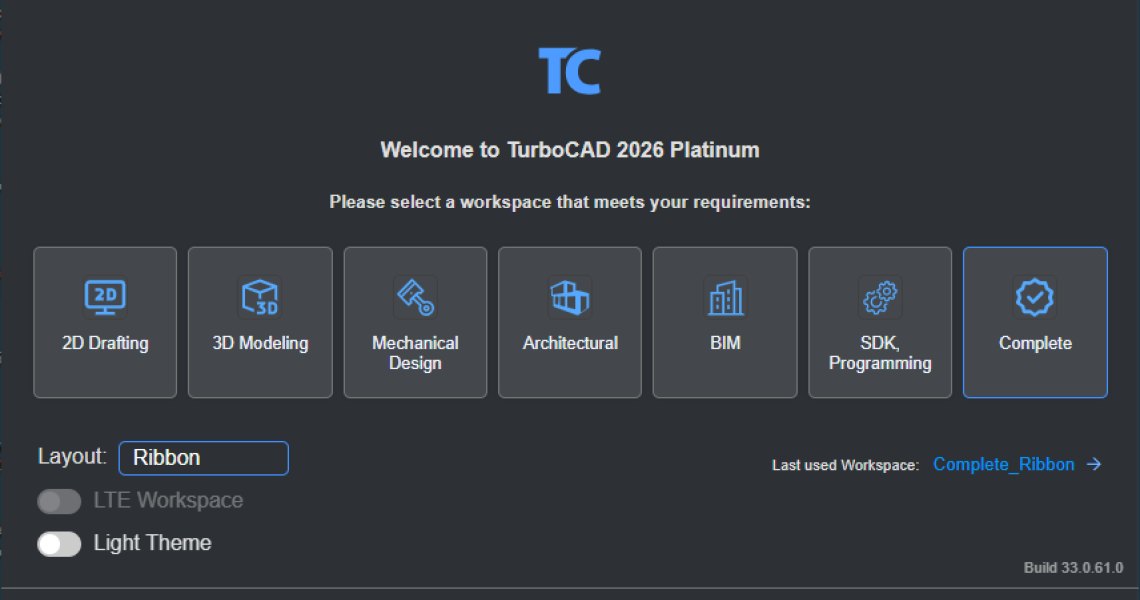
Most drawing sessions only ever touch a fraction of what TurboCAD can do. A mechanical part and a floor plan need almost nothing in common — yet by default the interface offers both. Workspaces fix that: each one exposes the commands, toolbars, menus and palettes that suit a particular kind of work, and hides the rest. Picking the right one is the quickest way to make TurboCAD feel like it was set up for the job in front of you.
The seven workspaces
- 2D Drafting – creating and editing 2D drawings and technical documentation.
- 3D Modeling – creating and modifying 3D models.
- Mechanical Design – mechanical design and engineering workflows.
- Architectural – architectural drafting and design.
- BIM – Building Information Modeling commands and functionality.
- SDK/Programming – development and programming workflows.
- Complete – the full, unrestricted configuration. Every palette, toolbar, menu and command, with no workflow filtering.
Availability depends on your TurboCAD edition — some include the full set, others a subset.
Launcher workspaces load defaults, not your customizations
Workspaces chosen from the TurboCAD Launcher are pre-configured layouts. Selecting one always opens TurboCAD in that default state — your own customized workspaces are not loaded automatically.
To return to the environment you were last working in, choose Last used Workspace in the Launcher. To open or save your own configurations, use the customization options inside TurboCAD itself.
Workspace and layout are two separate choices
In the Launcher's Workspace section you pick both the workspace and the Layout — Ribbon or classic Toolbars.
The workspace decides which tools are available. The layout decides how they are organized and accessed. They combine freely:
- Mechanical Design + Ribbon – the mechanical toolset in the Ribbon interface.
- Mechanical Design + Toolbars – the same toolset in the classic interface.
Why it is worth setting
- Faster access to the tools you actually use
- A more organized interface
- Less menu and toolbar clutter
- Easier command discovery
- A workflow shaped around your design requirements
An architectural designer works better in the Architectural workspace; a mechanical designer in Mechanical Design. The tools do not change — what you have to look past to reach them does.
Posted in:
TurboCAD
Related posts
-
Conceptual Visualization from Your CAD Model with Copilot Render
There is usually a gap between a drawing that is technically finished and one a client can react to. Copilot Render...Read more
-
Copilot Palette: Smart Help Trigger
Looking something up usually means breaking off what you were doing. Smart Help Trigger removes that step. With the...Read more
-
 TurboCAD Drafting Palette: A Powerful Tool for 2D Documentation
One of the most powerful, yet least known tools in professional versions of TurboCAD is the Drafting Palette. The...Read more
TurboCAD Drafting Palette: A Powerful Tool for 2D Documentation
One of the most powerful, yet least known tools in professional versions of TurboCAD is the Drafting Palette. The...Read more -
 TurboCAD for AutoCAD Users
Once you’ve made the decision to use TurboCAD, this guide will help you get started by outlining the few differences...Read more
TurboCAD for AutoCAD Users
Once you’ve made the decision to use TurboCAD, this guide will help you get started by outlining the few differences...Read more -
 Design Director
The Design Director is a powerful and convenient palette in TurboCAD that helps you streamline your work and enhance...Read more
Design Director
The Design Director is a powerful and convenient palette in TurboCAD that helps you streamline your work and enhance...Read more
Leave a comment